-
Company
-
Brands
- A House of Brands
-
Wholesale
-
Cochlear ImplantsCochlear Implants
-
RetailRetail
- AudioNova - Brazil
- AudioNova - Denmark
- AudioNova - Italy
- AudioNova - Sweden
- Audition Santé - France
- Boots Hearingcare - UK & Ireland
- Connect Hearing - Australia
- Connect Hearing - Canada
- AudioNova US
- Geers - Germany
- Geers - Hungary
- Geers - Poland
- Hansaton - Austria
- Lapperre - Belgium
- Schoonenberg - Netherlands
- Triton Hearing - New Zealand
-
Investors
- Investors overview
- Ad hoc announcements
- Why invest in Sonova & strategy
- Presentations & webcasts
-
Financial reports
- Current outlook
- Key figures
- Financial calendar
-
Corporate governance
-
Sonova shares & bondsSonova shares & bonds
- General Shareholder's Meeting
- Services & contacts
- Newsroom
-
Careers
-
Your career with us
-
Apply now
-
Why Sonova
- Get to know our talents
-
sonova global
- Global
-
North America
North America
-
Pacific
Pacific
-
Latin America
Latin America
- Asia
- Europe
Global
North America
Pacific
Latin America
Asia
Europe
-
Company
-
Brands
Brands
- A House of Brands
- Wholesale
- Cochlear Implants
-
Retail
- AudioNova - Brazil
- AudioNova - Denmark
- AudioNova - Italy
- AudioNova - Sweden
- Audition Santé - France
- Boots Hearingcare - UK & Ireland
- Connect Hearing - Australia
- Connect Hearing - Canada
- AudioNova US
- Geers - Germany
- Geers - Hungary
- Geers - Poland
- Hansaton - Austria
- Lapperre - Belgium
- Schoonenberg - Netherlands
- Triton Hearing - New Zealand
-
Investors
Investors & financials
- Investors overview
- Ad hoc announcements
- Why invest in Sonova & strategy
- Presentations & webcasts
- Financial reports
- Current outlook
- Key figures
- Financial calendar
- Corporate governance
- Sonova shares & bonds
- General Shareholder's Meeting
- Services & contacts
- Newsroom
- Careers
sonova global
Choose your country
- Global
-
North America
North America
-
Pacific
Pacific
-
Latin America
Latin America
- Asia
- Europe
Global
North America
Pacific
Latin America
Asia
Europe
29/04/2026 | 07:00 CEST | Sonova
Small habits, big impact: Protecting your hearing every day
For today’s International Noise Awareness Day, we spoke with our hearing protection expert, Jan-Willem Meinesz, about why preventing noise‑related hearing loss is easier than most people think and how a few simple changes can protect your hearing for life.
The noise you don't notice
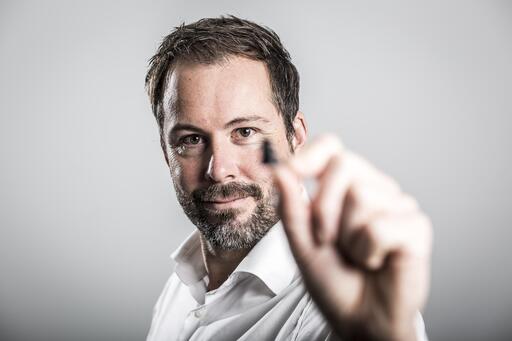
International Noise Awareness Day, highlighted annually on 29 April, is a good opportunity to reflect on something we rarely consider: the sound levels that affect our hearing health every day. Not just at concerts or construction sites, but in cafés, offices, and commutes. “Noise has become part of our hectic lifestyle,” says Jan-Willem Meinesz, Managing Director of Sonova’s hearing protection specialist brand Dynamic Ear Company in the Netherlands. “We have gradually become used to it, much like how we get used to consuming salt or sugar.”
Noise-induced hearing loss (NIHL) is considered the second most common cause of hearing loss after aging.1 It occurs when loud sounds — typically over 85 decibels (dB), roughly the noise level of heavy city traffic or a lawnmower — damage or destroy the tiny hair cells in the inner ear responsible for converting sound into signals the brain can process.2 Unlike most cells in the body, these cannot repair themselves, making any damage permanent. The reassuring part? This type of hearing loss is entirely preventable. Simple awareness and a few practical habits can make a real difference.
One of the most important concepts to understand is noise fatigue.3 Even moderate sound levels, when sustained over a full day, leave your ears tired, often without feeling noticeably loud in the moment. Ultimately, it’s not a single event that matters, but total daily exposure: every commute, every meeting, every social occasion layered on top of each other. A useful rule of thumb: If you have to raise your voice to be understood by someone standing next to you, you're already in the danger zone.
Hearing protection that works
“The excitement on people's faces when they experience what good hearing protection can do, that's a big motivator for me. People are often surprised by how much more relaxed listening can feel,” says Jan-Willem.
According to him, protecting your ears is easier and more comfortable than many people expect. High‑quality hearing protection is designed to protect the ears from harmful sound levels while maintaining a natural listening experience and clear speech perception as far as possible.4 This mindset is also gaining traction: what was once seen as uncool is increasingly accepted as a smart and desirable choice, particularly among concert-goers and festival crowds.
The most practical tip from Jan-Willem? Keep your earplugs stored in a small carry case attached to your keychain so you’ll always have them with you. And put them in just before entering a noisy environment, giving your brain a moment to adjust makes the experience noticeably more comfortable from the start.
Myths worth leaving behind
Still, two common beliefs stand in the way of better hearing care today. The first is the idea that occasional loud events don't really matter. In reality, every high-intensity exposure adds to the cumulative load on your ears. Layered on top of an already fatigued auditory system, even a single event can leave a lasting mark.
The second myth is perhaps more damaging: the belief that it's too late to act once some hearing loss has already occurred. “It isn't,” emphasizes Jan-Willem. While lost hearing cannot be restored, protecting what you still have is always worthwhile. Hearing loss is also shaped by many factors beyond noise, i.e. aging, genetics, overall health, fatigue, and even medication. At any stage of life, supporting your hearing health, for example, by using hearing protection in noisy environments, is more important than most people realize.
Know the early signs of a noisy environment
The early signals are often subtle: needing a little more effort to follow conversations in noisy environments, occasional tinnitus (a persistent ringing or buzzing in the ears) after a loud evening, or an increasing sensitivity to certain sounds. These are easy to overlook, and it can take years before a change shows up clearly on a hearing test. That's exactly why proactive habits matter — not only to prevent damage in extreme situations, but to reduce the everyday strain on your ears and preserve what you have for the long term.
“Your hearing shapes how you experience the world, conversations, music, the sounds of daily life. This International Noise Awareness Day is a good moment to start treating it that way: check in with your ears, keep your earplugs close, and take the small steps that add up to a lifetime of better hearing,” concludes Jan-Willem.
Hearing protection: our range Across its portfolio of brands, Sonova offers hearing protection solutions for a wide range of everyday situations — from concerts and festivals to noisy workplaces and travel. All products share a common principle: reducing sound to safe levels while preserving sound quality and natural listening comfort, so protection never comes at the expense of the experience. The core technology for this comes from Dynamic Ear Company, part of the Sonova Group. | |
Sennheiser SoundProtex & SoundProtex Plus High-fidelity filter earplugs for concerts, festivals, and loud everyday environments. The Plus variant offers multiple filter levels for different attenuation levels. | Phonak A range of premium filter earplugs designed for every environment, from music, work, motor sport, travel and sleep to specialist applications such as hunting and shooting. Available in universal and custom-fit versions, Serenity Choice adapts to individual needs and lifestyles. For industrial and security professionals, Serenity Choice Pro provides certified hearing protection against sustained and impulse noise, while preserving natural sound quality, speech intelligibility, and situational awareness. |
Audia Akustik Custom made hearing protection solutions made of silicone, acrylic and even titanium. | DYNAMIC ear filter Generic fit hearing protection with advanced membrane filters and special impulse filters to protect against explosive and other sudden peak sounds. |
References:
1 Natarajan, N.; Batts, S.; Stankovic, K.M. Noise-Induced Hearing Loss. J. Clin. Med. 2023, 12, 2347. https://doi.org/10.3390/jcm12062347
2 NIDCD Information Clearinghouse, found at: https://www.nidcd.nih.gov/health/noise-induced-hearing-loss
3 Venet T, Thomas A, Merlen L, Boucard S, Wathier L, Martin Remy A, Pouyatos B. Parameters influencing auditory fatigue among professionals working in the amplified music sector: noise exposure and individual factors. Int J Audiol. 2024 Sep;63(9):686-694. doi: 10.1080/14992027.2023.2240012. Epub 2023 Aug 25. PMID: 37622173. https://pubmed.ncbi.nlm.nih.gov/37622173/
4 Shehorn J, Strelcyk O, Zahorik P. Associations between speech recognition at high levels, the middle ear muscle reflex and noise exposure in individuals with normal audiograms. Hear Res. 2020 Jul;392:107982. doi: 10.1016/j.heares.2020.107982. Epub 2020 May 7. PMID: 32454368. https://pubmed.ncbi.nlm.nih.gov/32454368/